Understanding Deadlock in Computing
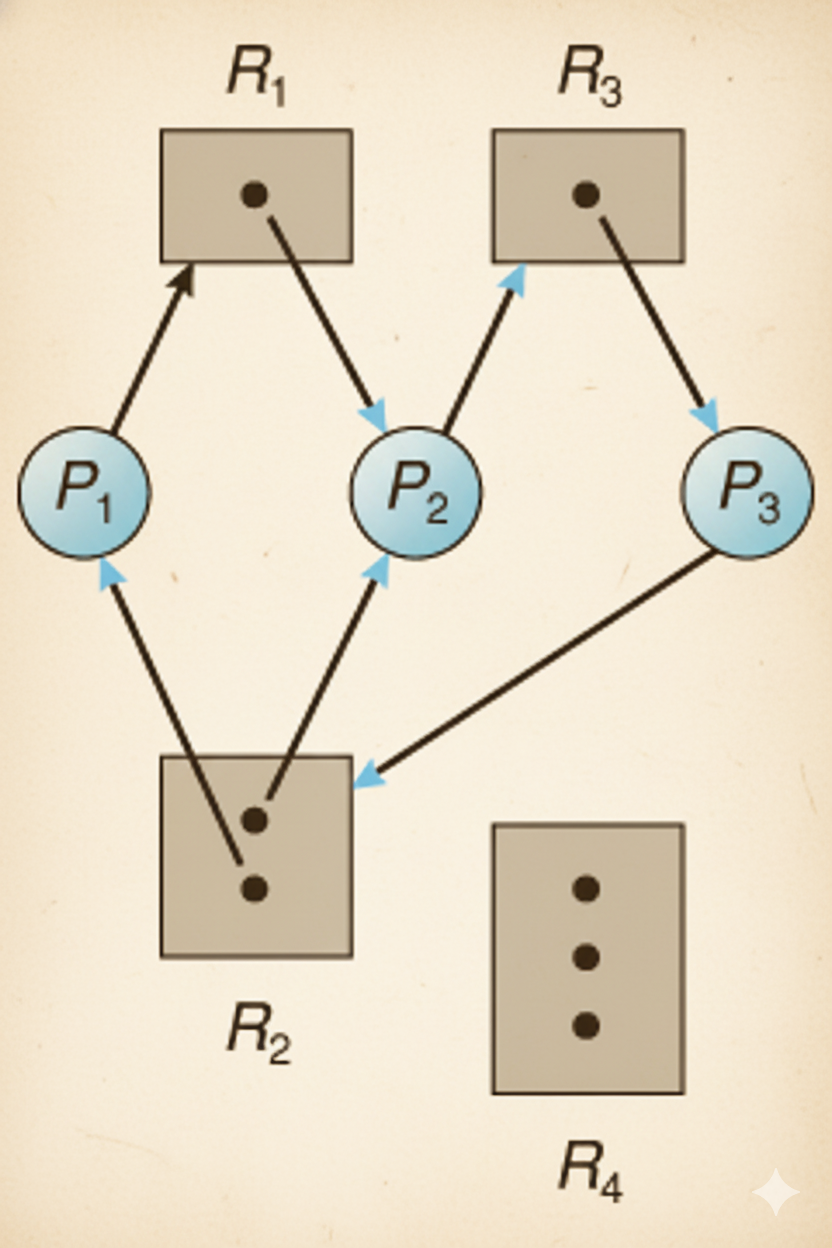
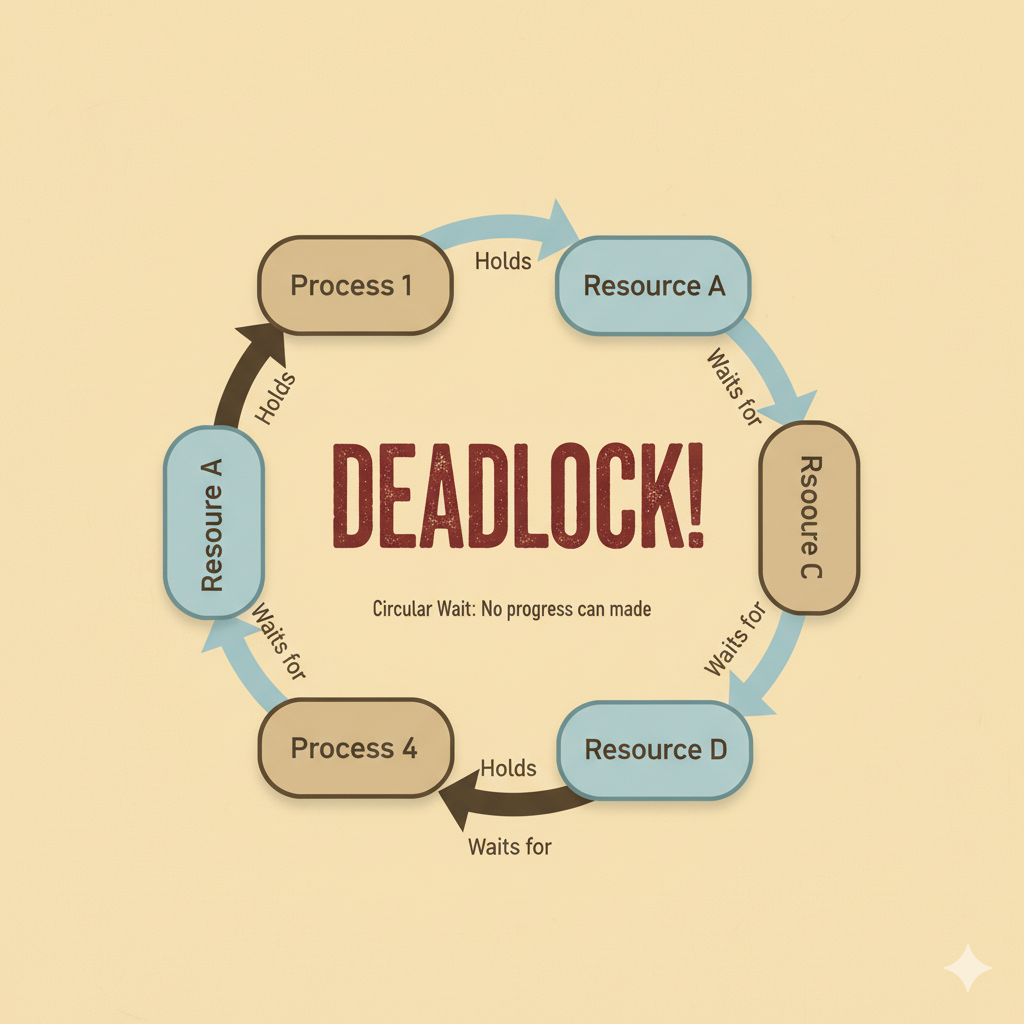
Deadlock is a situation in an operating system where two or more processes are blocked indefinitely, waiting for each other to release the resources that they need. Imagine a circular waiting game where no one can move forward.
How a Deadlock Happens
A deadlock can only occur if four necessary conditions are met simultaneously (the Coffman Conditions):
01 Mutual Exclusion: At least one resource must be held in a non-sharable mode.
02 Hold and Wait: A process holds at least one resource while waiting for another.
03 No Preemption: A resource cannot be forcibly taken from a process.
04 Circular Wait: A closed chain of processes waits for resources held by each other.
How to Avoid Deadlocks with Algorithms
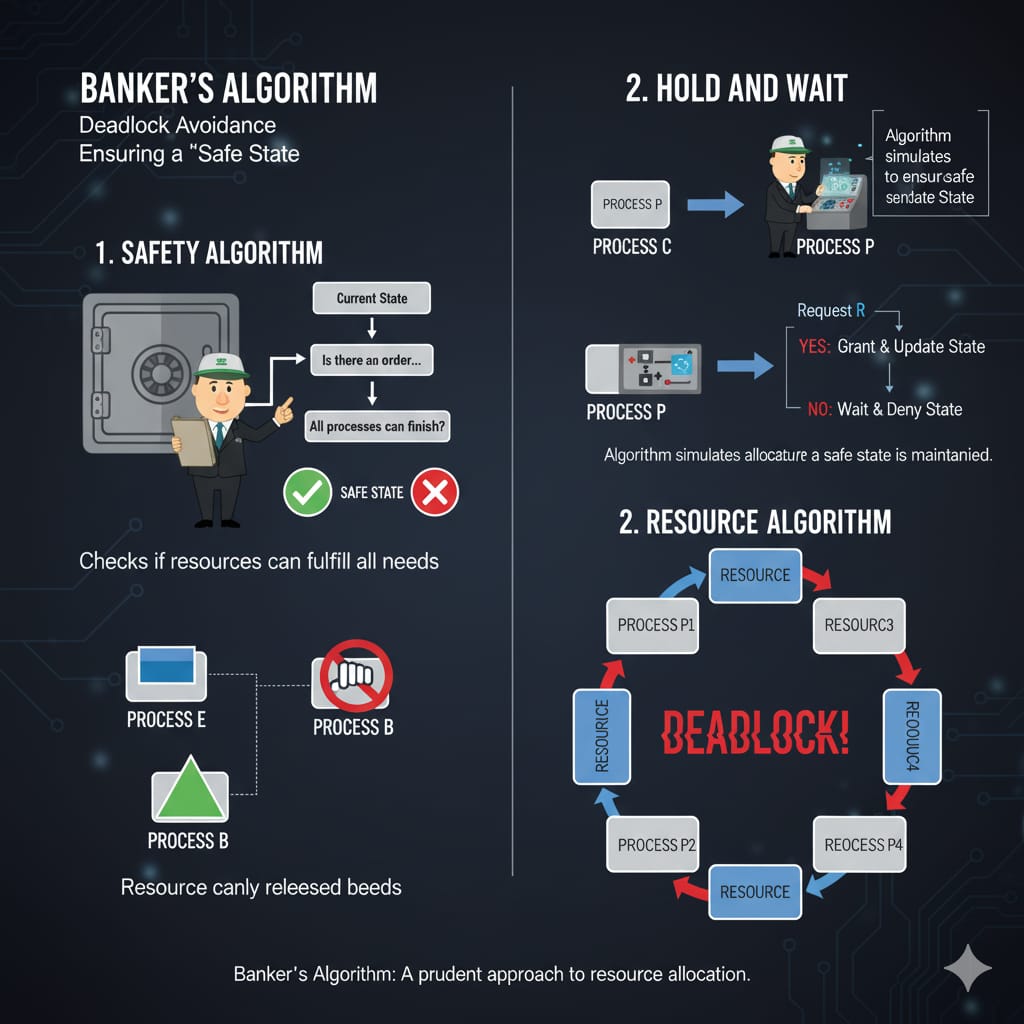
Deadlock avoidance requires that the operating system be given additional information about how resources are to be requested. With this knowledge, the system can decide for each request whether or not the current state is "safe." A state is safe if the system can allocate resources to each process in some order and still avoid a deadlock.
The Banker's Algorithm
This famous algorithm works by simulating the allocation of resources to check for a safe state. It requires knowing the maximum number of resources of each type that each process may request. Imagine a bank where the banker (OS) makes sure that it never lends out money (resources) in such a way that it can't fulfill all outstanding lines of credit (maximum needs).
Deadlock Detection
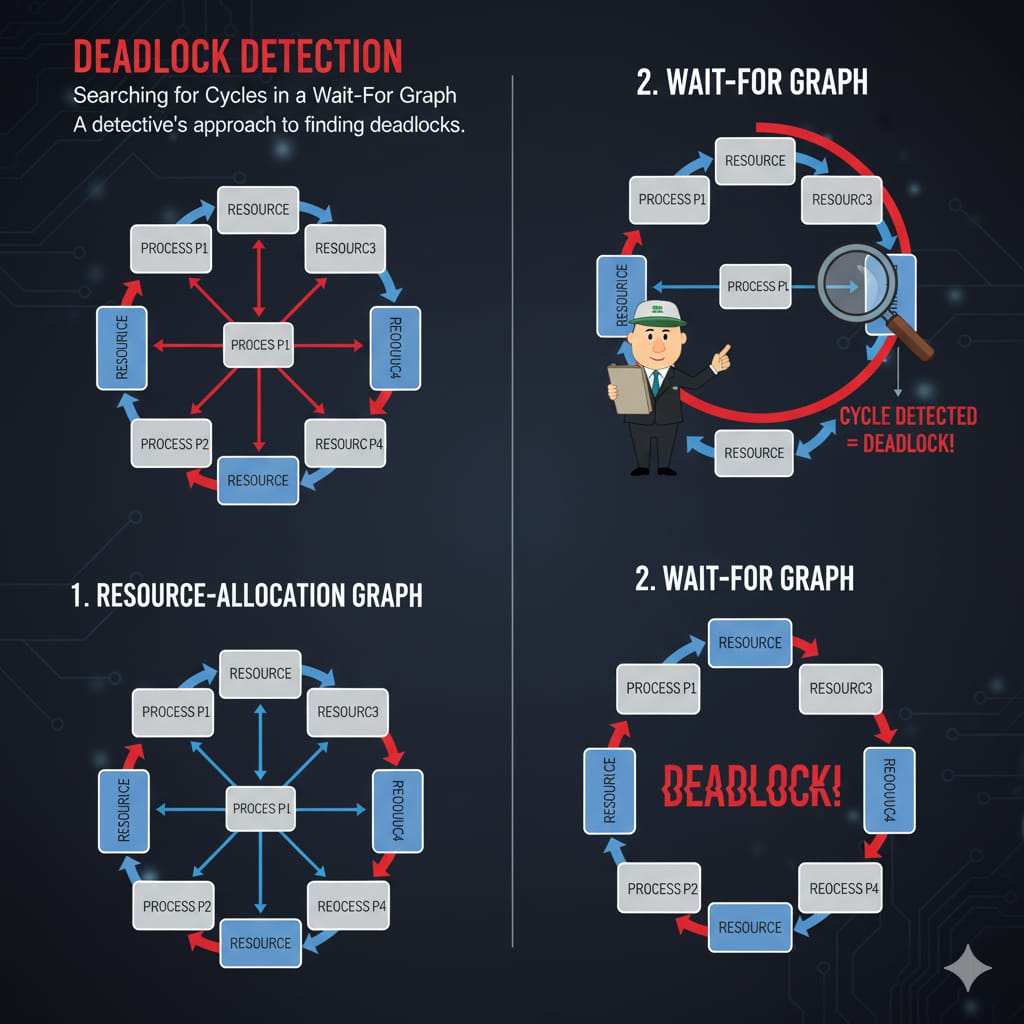
If deadlocks are not avoided, they must be detected. Deadlock detection algorithms are run periodically to check for their presence. A common approach involves constructing a resource-allocation graph or using wait-for graphs and checking for cycles. A cycle in a wait-for graph indicates a deadlock.
Think of it like a detective searching for a pattern (a cycle) of processes waiting for each other.
Interactive Deadlock Simulation
This simulation will demonstrate the "Circular Wait" condition, leading to a deadlock.